-
01
He joins the call
Google Meet, Teams or Zoom. He listens the whole way through and reads the real
speaker names off the captions, so the notes say who asked for what. Ask him
anything mid-call and he answers from your codebase, not from memory.
-
02
The notes write themselves
A markdown file lands in the project's own meetings/ folder before
the call has finished: summary, decisions, and every action item with an owner and
a date. Because it is read against your repository, "fix the bid screen" comes back
naming the screen.
-
03
He asks you first
The action items come back as a numbered list on WhatsApp, Telegram, Discord or
email — as text and as a voice note. Answer however you like: "yes", "just one and
three", or "do it all but don't push to main". He reads it back before he starts,
and nothing is built that you did not approve.
-
04
He does the homework
Before a pixel is drawn he researches the client and their sector, and — if they
already have a site — reads its other pages first, so the new work sits beside them
instead of arriving as a different company's.
-
05
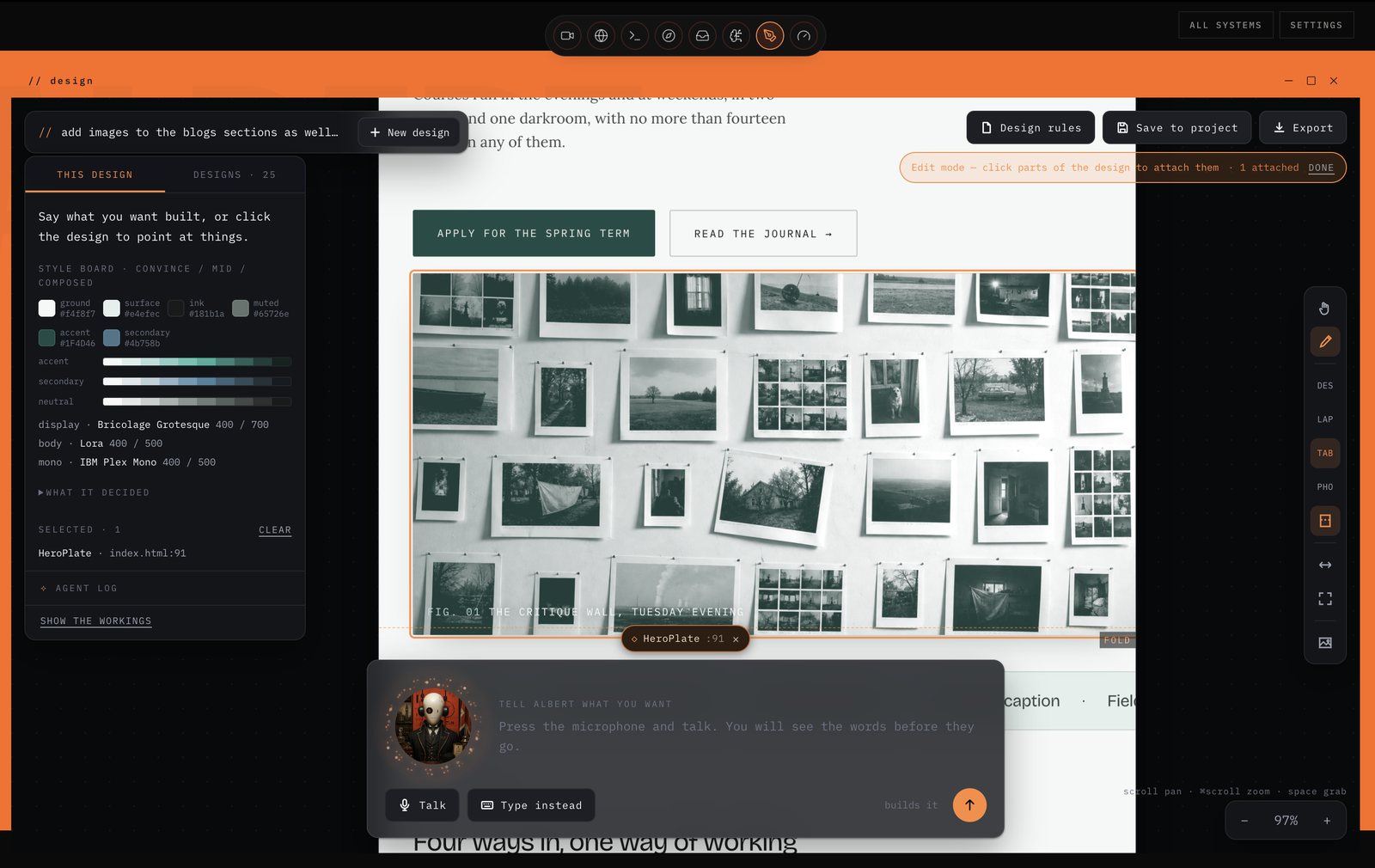
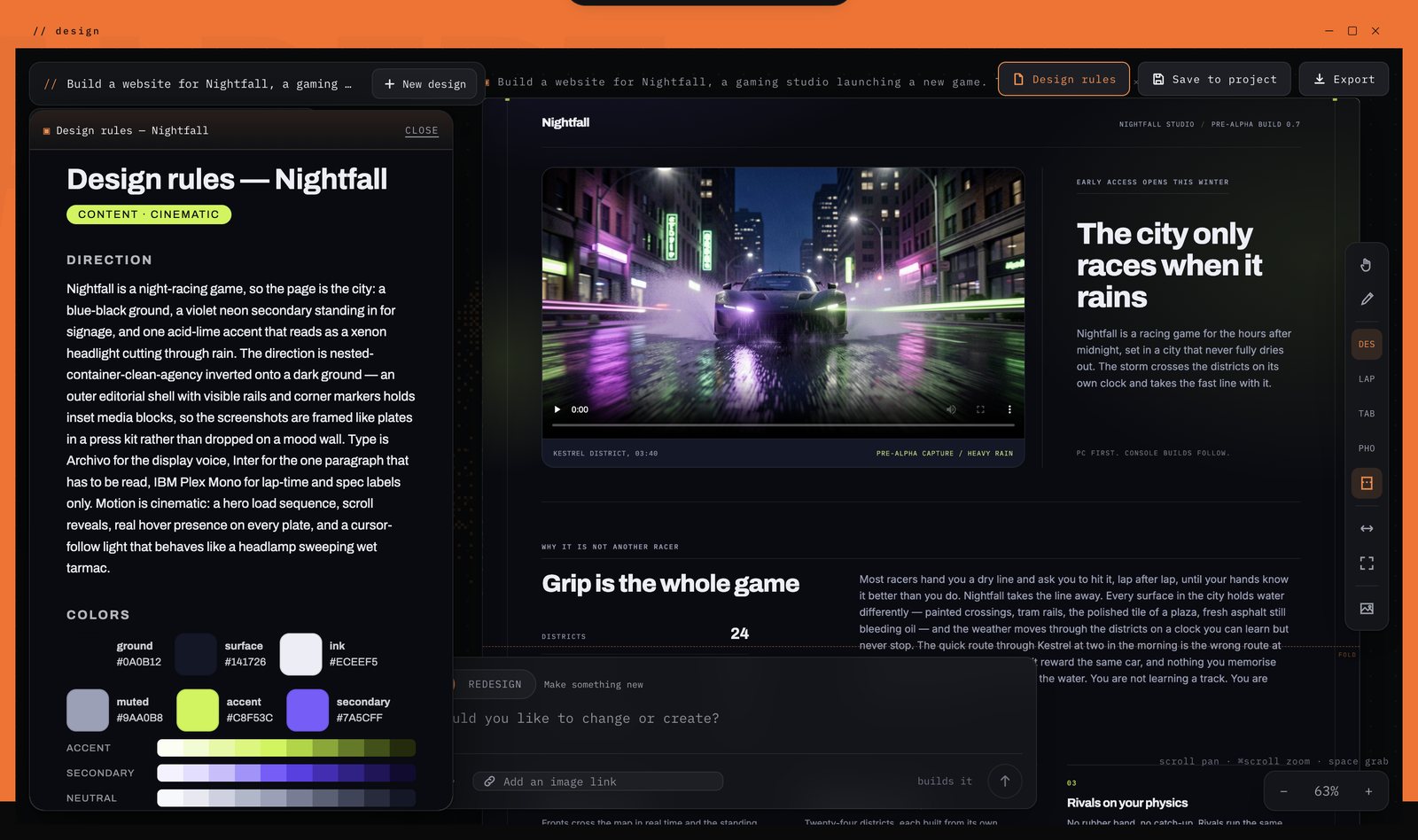
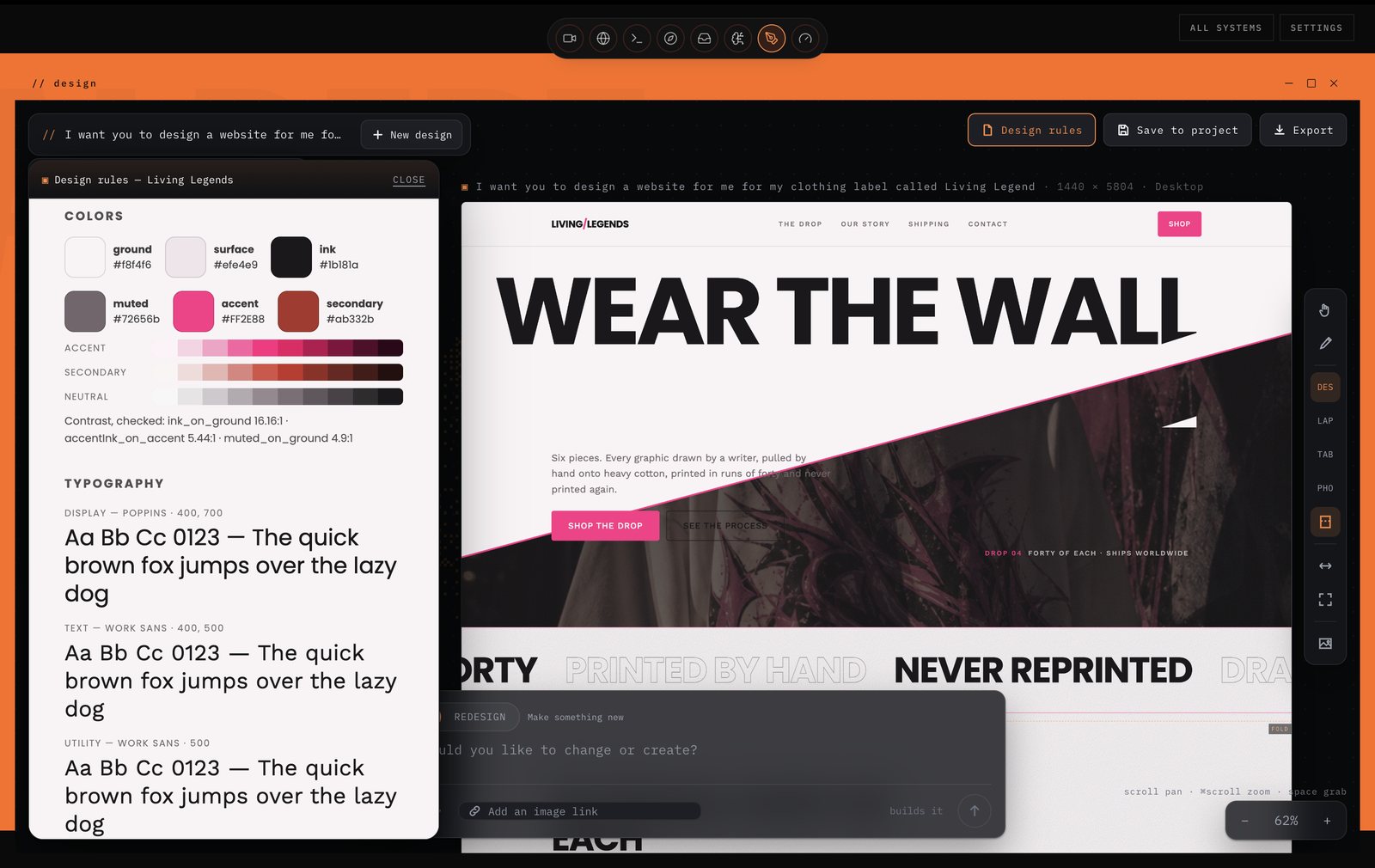
He designs it
A real page, not a template: palette, type pairing and section grammar chosen for
that sector, then photographed and reviewed against its own brief before you see
it. Point at anything on the canvas and tell him what to change. Then he asks
whether to build it.
-
06
He builds it, and tells you
Real code in your repository, on its own branch, built from the design you approved
rather than a description of it. He works for as long as it takes, keeps going
through the night, and messages you on the same thread when it is done.